Adult Couch’s Spade Foot Toads

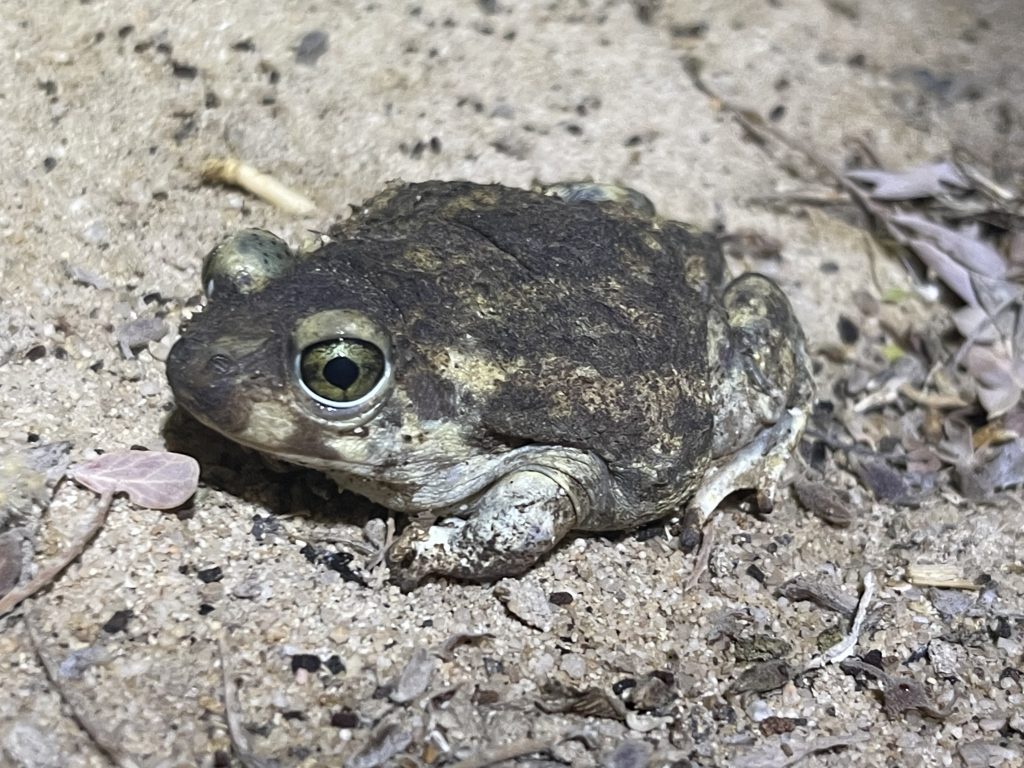
Adult Couch’s Spade Foot Toads (Scaphiopus couchii) are funny, tubby and shockingly circular frogs with big appetites. These nocturnal toads can be observed on wet nights primarily in the summer, but I have witnessed individuals in the spring and fall as well. Hopping to and fro, eating all kinds of insects and spiders, in our yard I have even witnessed a toad gorging himself on the many insects attracted to one of our lights.

After the summer rains, when the tadpoles have already metamorphosed into their adult form close to the pool in which the eggs were laid, there are small, adorable toads EVERYWHERE!  As they age, they start adding mass and growing their bellies to the point where their bellies stick out past their legs. Once they are of larger carriage, the toads head underground for most of the winter, as the dry season will usually be well underway.

Interestingly, these toads have a unique shovel on their back feet that helps them dig, hence the name: spade foot toad. If picked up, they will proceed to jump out of your hands constantly and pee all over you, making them not one of the most pleasant creatures to hold, but they are harmless. 

As the wet season progressed this summer, I was very worried that my cat, Zorro, would capture and eat the toads during the wet nights in which toads were abundant, so I watched him one night. After a while, he approached a small toad that I had not seen. Confidently, he swaggered up and proceeded to study it intently. After a few seconds, he sat down and placed his paw directly on top of the toad, which just sat there for a minute before hopping away, and Zorro soon walked away as well. I have, therefore, happily concluded that toads are considered boring to cats.
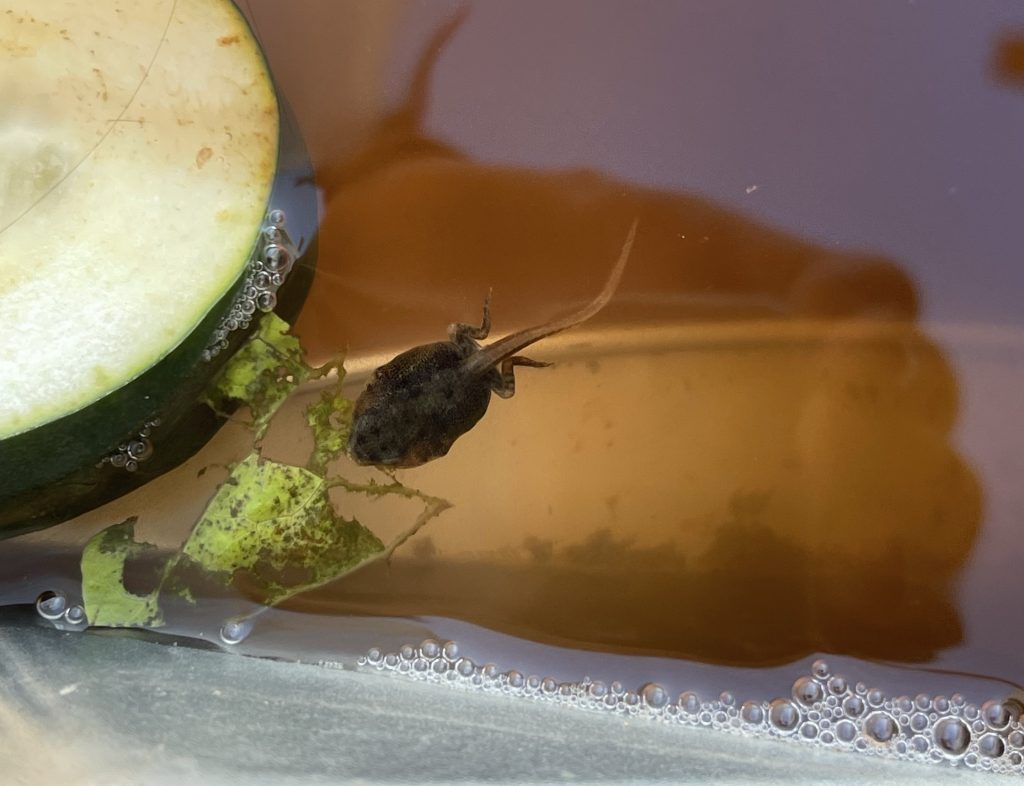
Couch’s Spade Foot Toad

Today we have a guest of honor! Although it is not a reptile (it’s an amphibian), I believe the Couch’s Spade Foot Toad deserves a column. As many of you know, here in LV/ES we have had a rainy September so far, with one tropical storm and a hurricane already. Although this can cause problems for humans, the local toads need the summer rains to reproduce.

A little over a week ago, we had our first big rain of the year on my family’s property in El Sargento. It rained all night. When I looked out my window, I saw that our road was a river! As I left my camper, I immediately heard a chorus from our lovely neighbors: the toads. I ran down our street to find that one of our friend’s yards had become a lake, which I christened “Lake Driveway.” It was brimming with Couch’s Spade Foot Toads. Over the next few hours, the toads called and called and called, with toads seemingly materializing out of nowhere. These rainfalls are the toads’ only chance to reproduce for the entire year, in most cases.

Then, as quickly as it started, it was over; by the afternoon, most of the toads had disappeared. However, what came next was even more exciting. Since water never lasts long in the desert, Couch Spade Foot Toads have adapted so that their eggs hatch in an astonishing 15-24 hours, and the tadpoles grow into toads in as little as 9 days.

The next morning, I headed to a smaller pool on the next lot up from Lake Driveway that was shrinking fast. The sun was coming out and I could tell the pool would probably not even last a few hours. It was full of hatchling tadpoles and I knew that, if I did nothing, the tadpoles would die. Quickly, I got a bin and set up a little tadpole enclosure, scooped up a few (which ended up being like 50), and brought them up to my camper. These young toads will eat just about anything made out of a plant so I experimented and, it turns out, they love lettuce and cucumbers, just like my old guinea pigs. So far, the “puddle pigs” are doing very well.

Over the last few days, I have stopped along roadsides to find puddles full of tadpoles. As these toads can live in temporary, polluted pools in parking lots with cars and trucks driving through them, I believe that Couch’s Spade Foot Toads are some of the toughest amphibians on Earth. Adult spade foot toads are very interesting, too, and I will go over them in a different week’s column.

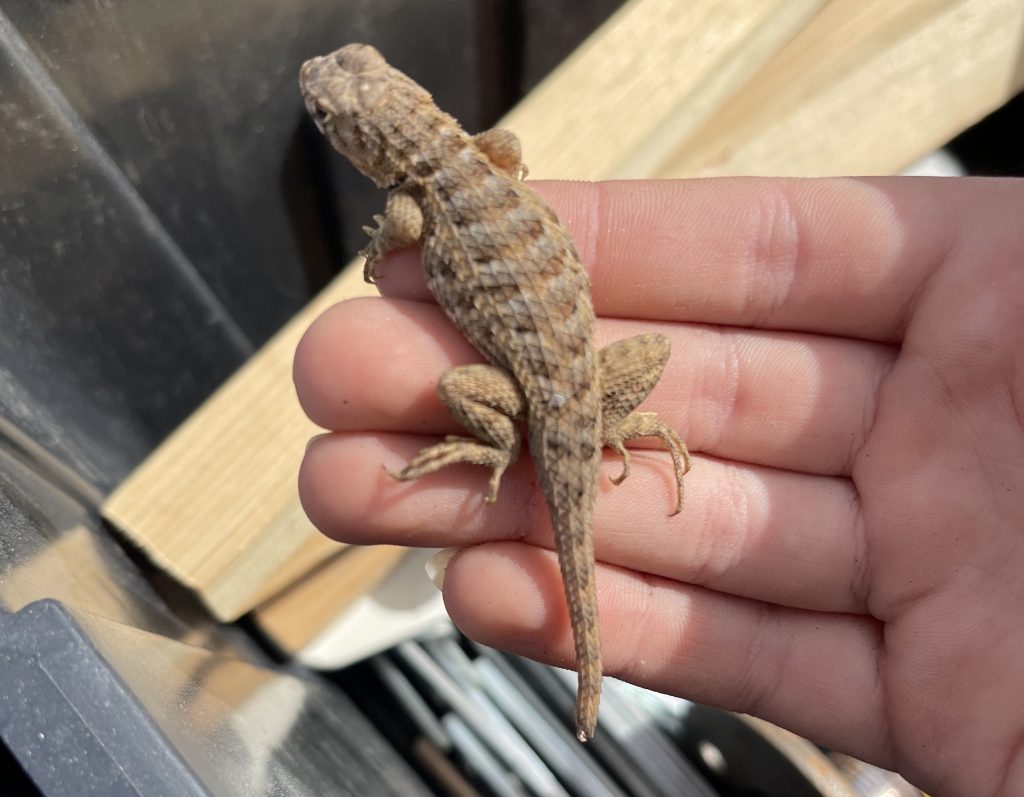
Baja California Spiny Lizard

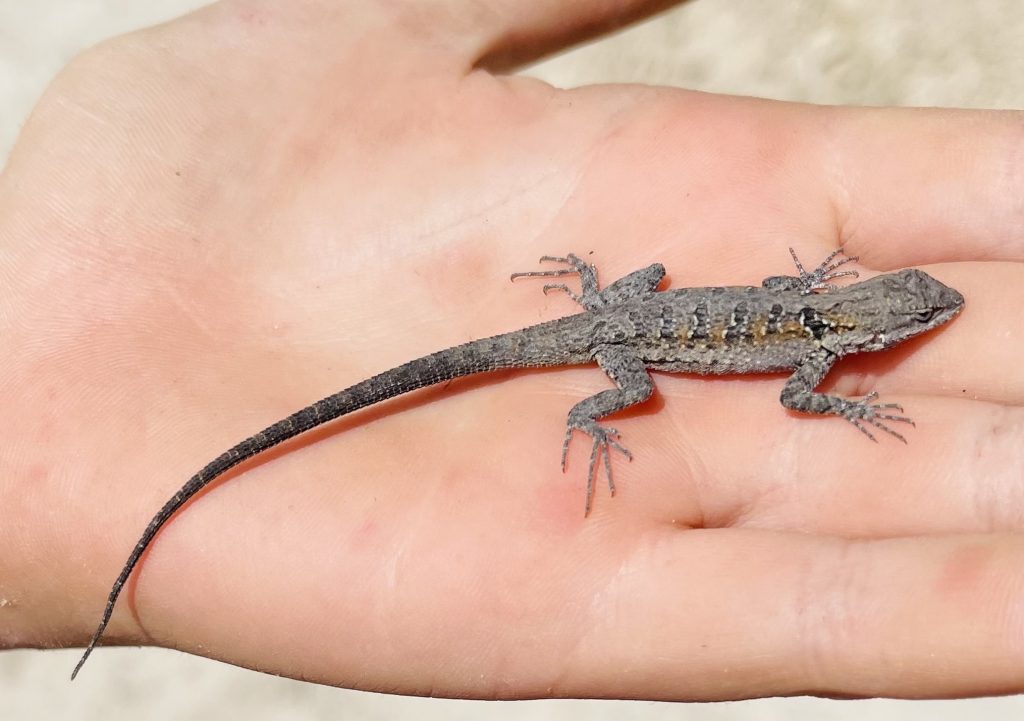
The Baja California Spiny Lizard (Sceloporus zosteromus) is a fast, cautious and semi-large reptile widespread across Baja California Sur. These interesting spiny lizards are closely related to the very common Western Fence Lizards that I have been catching for many years in my hometown of Bend, Oregon. 

Baja California Spiny Lizards are some of the larger members of the Spiny Lizard family and, in my experience, some of the hardest to catch, as they never stray too far from cover. As diurnal reptiles, they spend the day out and about and the night sleeping (like me) compared to geckos, which are just waking up at sunset (like my brother). 

Baja California Spiny Lizards are most prominent in the summer, spring and fall. However, they are sometimes out in the winter on warm days, especially young lizards like the one in the photo. 

Although the diet of these specific lizards is relatively unknown, I have witnessed a large adult hanging around a cow patty and gorging on the attracted flies, and another individual with a beetle in its mouth. The most common place to see these lizards is typically sunning on rocks or brush in the morning before the heat of the day or just foraging in their habitat, which is shrubby flats to rocky hills.

Cape Thread Snake

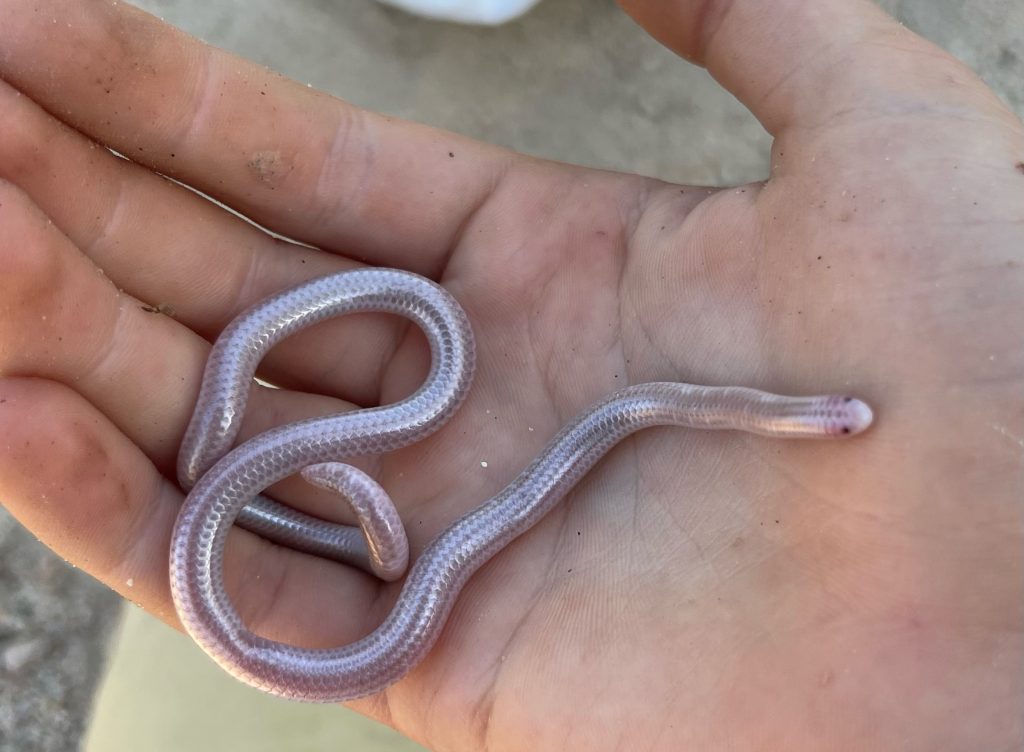
Cape Thread Snakes (Rena boettgeri) are the strangest snakes that I have ever seen, by far! 

These small, burrowing, worm-like creatures primarily eat ants and termites, as well as their larvae. They are most commonly found in well-vegetated areas with loose soil. The one in this photo was found in our neighbor’s water cistern. 

Since Cape Thread Snakes are long and thin, hardly tapering on either end, they seem more like worms than snakes. Their eyes are very small and can be hard to see, resembling scales; their mouths are so tiny they look as though they were an afterthought; and, last but not least, their scales are translucent PINK!

Western Leaf-Nosed Snake

Western Leaf-Nosed Snakes (Phyllorhynchus decurtatus) are interesting, small and harmless snakes that inhabit sand dunes and desert landscapes with creosote bushes. They are strictly nocturnal. These little snakes — and I mean little! 12 to 20 inches (or 30 to 50cm) as adults — are very specialized and have a fascinating diet of mostly lizard eggs; however, they will also eat geckos, other lizards and sometimes bugs.

When I found my first and only leaf-nosed snake so far, a few of my friends and I had been watching the sunset at the Bufador south of town. It was getting dark and my friends headed home, so it was just me and my dad. As we were getting ready to go, I proposed the idea of driving slowly down the road with a spotlight to try to find a nocturnal snake. Begrudgingly, we set off kind of slowly down the road. 

After a few minutes —I had seen a few beetles but nothing too interesting — we headed onto a large, wide sandy road and my dad took the opportunity to speed up, saying “There will not be any snakes here.” Well, as luck would have it, there was a juvenile Western Leaf-Nosed Snake right in the middle of the road. I yelled “SNAKE! STOP!!! SNAKE!!!!!” To my horror, we went directly over it. 

My dad stopped a little way up the road and I leaped out of the car. Luckily for the snake — and my dad — the snake was fine and had not been hit. Since then, I have gone out to the Bufador at night probably 10 times and have not seen a single other snake, so I guess I just got lucky.

Sea Turtle

Sea turtles are amazing and magical animals to see in the wild. These majestic swimmers are, no doubt, some of the most tenacious turtles in the world. Though only an estimated 1 in 1,000 hatchlings makes it to adulthood, once full grown they are capable of defending against the most brutal of attacks, even from sharks.

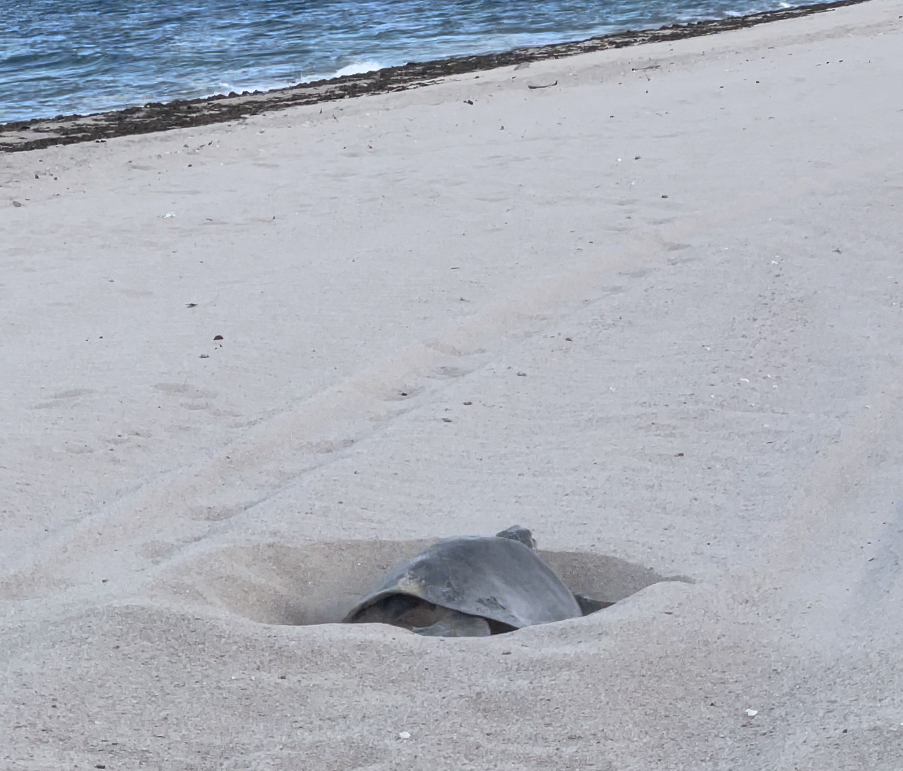
Here on the Sea of Cortez, our most common sea turtle is the Olive Ridley Sea Turtle (Lepidochelys olivacea) and this is the turtle we recently witnessed digging nests in the sand. Last week, at around 8:30pm, one of these beautiful reptiles crawled up the beach and started digging a hole. Clearly a female preparing to lay eggs, she dug a few test holes before deciding the conditions were not quite right; perhaps the sand was too dry or the wrong temperature. Then she headed back out to sea. We knew there were no eggs in the nest because the mother turtle left the nests as holes, rather than packing them down with her flippers and body.

Sea turtles are definitely being threatened as the world is changing, from their eggs getting squished by cars or dug up by dogs, to pollution and global warming. Since plastic sometimes looks like jellyfish, which is a favored food, it can be devastating when turtles mistakenly eat it.

When the mother turtle dug her holes on the beach last week, the six false nests were quickly covered by a protective fence and stakes by some caring beachgoers. Although pointless in this case, since the nests didn’t contain any eggs, their action demonstrates how much people care. Acts of kindness like this can make a big difference in helping these important and incredible creatures’ next generation.

Desert Iguana

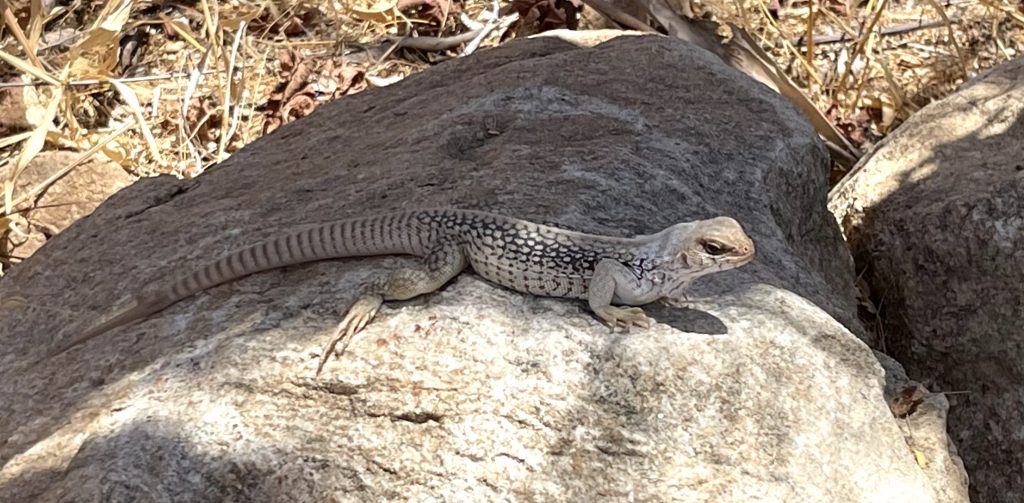
Desert Iguanas (Dipsosaurus dorsalis) are fast, robust and very common lizards that like it hot! They will be out and everywhere above 40 degrees Celsius. These iguanas are, arguably, the most abundant lizards in La Ventana and the surrounding region. 

According to the book Reptiles and Amphibians of Baja California (by L. Lee Grismer), these reptiles are active from March through October in Northern Baja, and variable in Southern Baja. Since La Ventana is so windy in the winter, it may be too cold for these heat-loving iguanas, and I believe they hibernate through the winter here like they do in the north. I did not see a single Desert Iguana all winter.

As for their diet, they eat a lot of leafy vegetation and insect larvae.Now for the story of how I finally caught a Desert Iguana: It was a warm morning just a few days ago and I was determined to catch something. I had been on the trail of a large Zebra-Tailed Lizard when I noticed my cat sitting attentively next to a piece of hollow pipe. I went over and heard a scrabbling sound from inside the pipe. Suddenly very interested, I tried to see what was inside. After several failed attempts, I decided to bring the pipe inside my house so that whatever it was would not escape. The next ten minutes were spent chasing a large Desert Iguana around a small empty room and then, finally, I caught my first representative of this species.

Speckled Rattlesnake

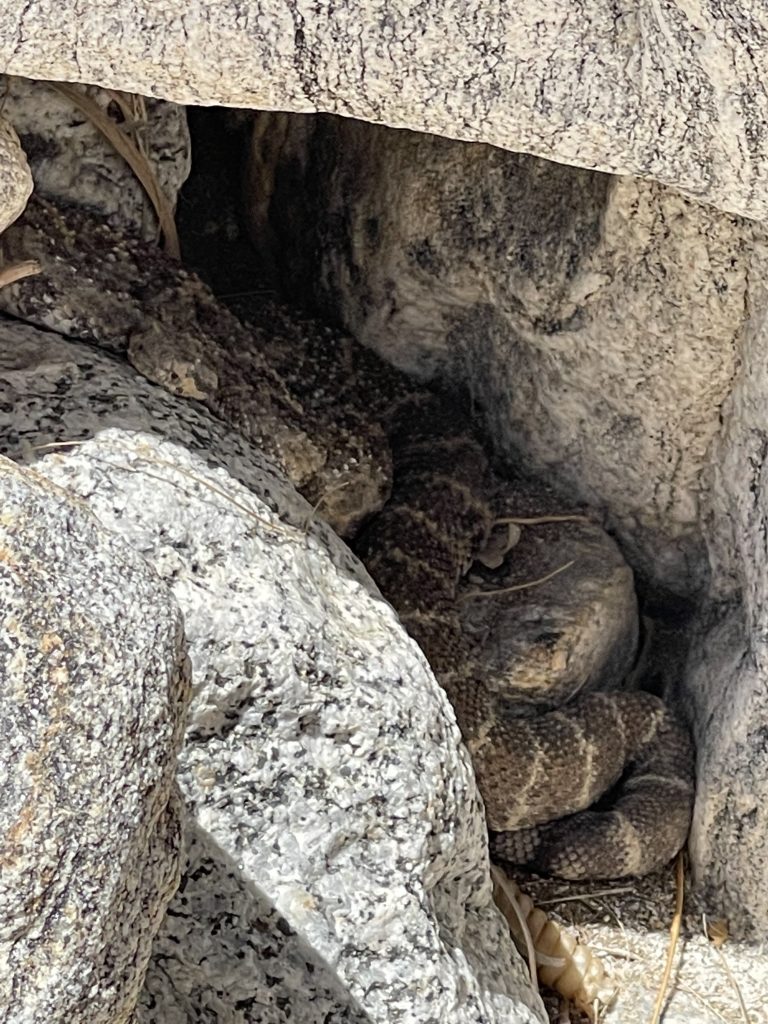
The Speckled Rattlesnake (Crotalus mitchellii) is one of several species of rattlesnakes that inhabits the area around La Ventana, living exclusively near rocky areas. They eat mostly rodents, and sometimes birds and lizards.

Rattlesnakes are ambush predators, meaning they will lie in place for days on end, waiting for prey to pass by. Most of the time, their ambush spots will be in rock crevasses or “hidey-holes.” They are semi-nocturnal in the winter, and fully nocturnal in the summer.

Rattlesnakes are one of the most feared and unjustly killed groups of snakes. Being venomous, people are scared of them and may act on those fears, which is the reason they are in decline. Yet, like many other venomous snakes, if you leave them alone you are extremely unlikely to be bitten. And it’s pretty easy to leave them alone if you just pay attention: they like to live hidden in rocks, so they are hard to find in the first place, and their rattle serves as a warning to be cautious. The majority of rattlesnake bites – over 90%! – happen because people either are not paying attention and accidentally step on them, or are trying to catch or kill them.

If you are bitten, the best thing to do is stay calm and find the nearest place with anti-venom, typically at a hospital. In La Ventana, the closest hospital with anti-venom is in La Paz. Being bitten hurts a lot but most snake bites are not fatal. Ideally, you should get anti-venom as quickly as possible; for rattlesnakes, you have at least three hours.

California King Snake

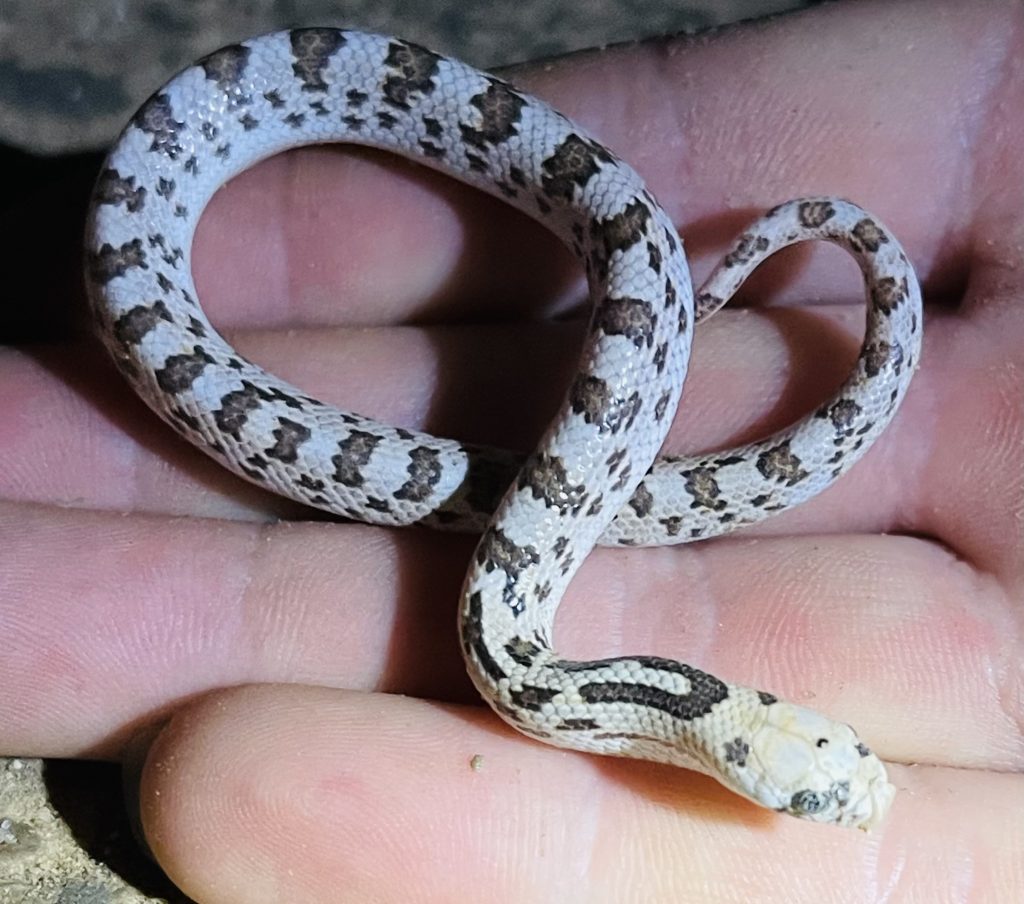
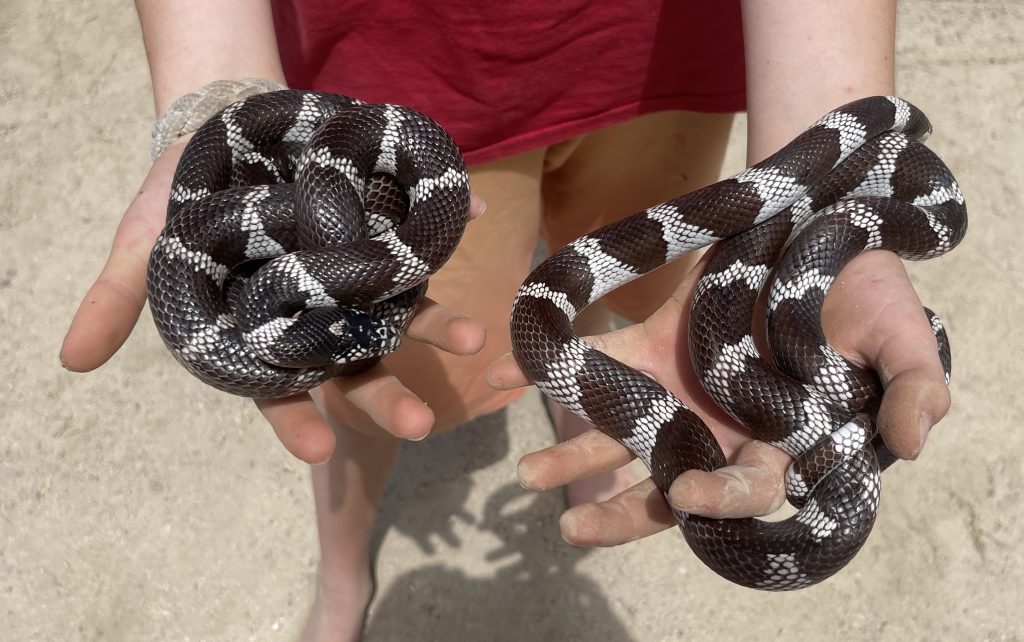
California King Snakes (Lampropeltis californiae) are some of the most powerful snakes in the world. In general, pound for pound, king snakes are the strongest constrictors.

Though they are famous for their ability to eat rattlesnakes and other snakes like Rosy Boas, their usual diet consists of rodents, young birds, lizards and anything else with a tail and a head.

King snakes live in almost every habitat on the Baja California Peninsula, including urban areas, salt flats and sand dunes, but they are extremely rare. My good friend who grew up in La Ventana has never seen one, and it has long been my dream to find one.

Last week, I heard my dad shout “SNAKE!” I was expecting a coachwhip or maybe a gopher snake but, when I got there, I saw my first king snake. I was in shock.

After holding her for a minute, she unfortunately regurgitated a Rosy Boa (regurgitating is a defense mechanism for many snakes, as it makes them lighter and faster, which they hope will help them escape). I was lucky to see a king snake at all, and this was something very special, but there was more to come.

Black-Tailed Brush Lizard

The Black-Tailed Brush Lizard (Urosaurus nigricauda) is a camouflage, adaptive and sneaky reptile that likes to live in trees, rocky areas and, as its name suggests, brush. This is a relatively small lizard that always seems to assume you can’t see it, making it one of the easiest to catch and one of my personal favorites.

Interestingly, at the Sol de Mayo waterfall, I have seen a Black-Tailed Brush Lizard living on a rock next to the river. As I approached, it jumped into the water and swam to the nearest rock. That was the first lizard I have ever witnessed swimming, and willingly, no less! I find this very impressive.