Spare the Non-Venomous Snakes!

Apr 6, 2022 – Usually I would have an article all about one specific reptile but, this time, I have a topic that is far more important.

Earlier this week, a friend contacted me saying that there was a snake on his cousin’s farm and they were going to kill it. I got there as soon as possible and, luckily, they had waited for me. It was a harmless and beneficial Cape Gopher Snake that eats mice and keeps the farm from getting rodent-infested. (I have an entire column on Cape Gopher Snakes in the archive.)

This is a real lesson.

Many of the 16-ish non-venomous snake species around La Ventana somewhat resemble venomous rattlesnakes and will do their best to act like rattlesnakes to ward off predators. Unfortunately, since people are so afraid of rattlesnakes, this defensive mimicry has the opposite effect on humans. In other words, rather than warding off human predators, acting like a rattlesnake actually makes people more likely to hurt or kill a snake.

However, there are ways to help. For example, our neighbors are having a house built and I have befriended the workers. They know that I love reptiles so, every time they find one, they let me take it instead of possibly killing it. In this way, I have assisted three sand snakes, two whiptail lizards and many scorpions.

If you find a snake or lizard and don’t know what to do with it, I am more than happy to identify and/or relocate it, which is not ideal but sometimes necessary.
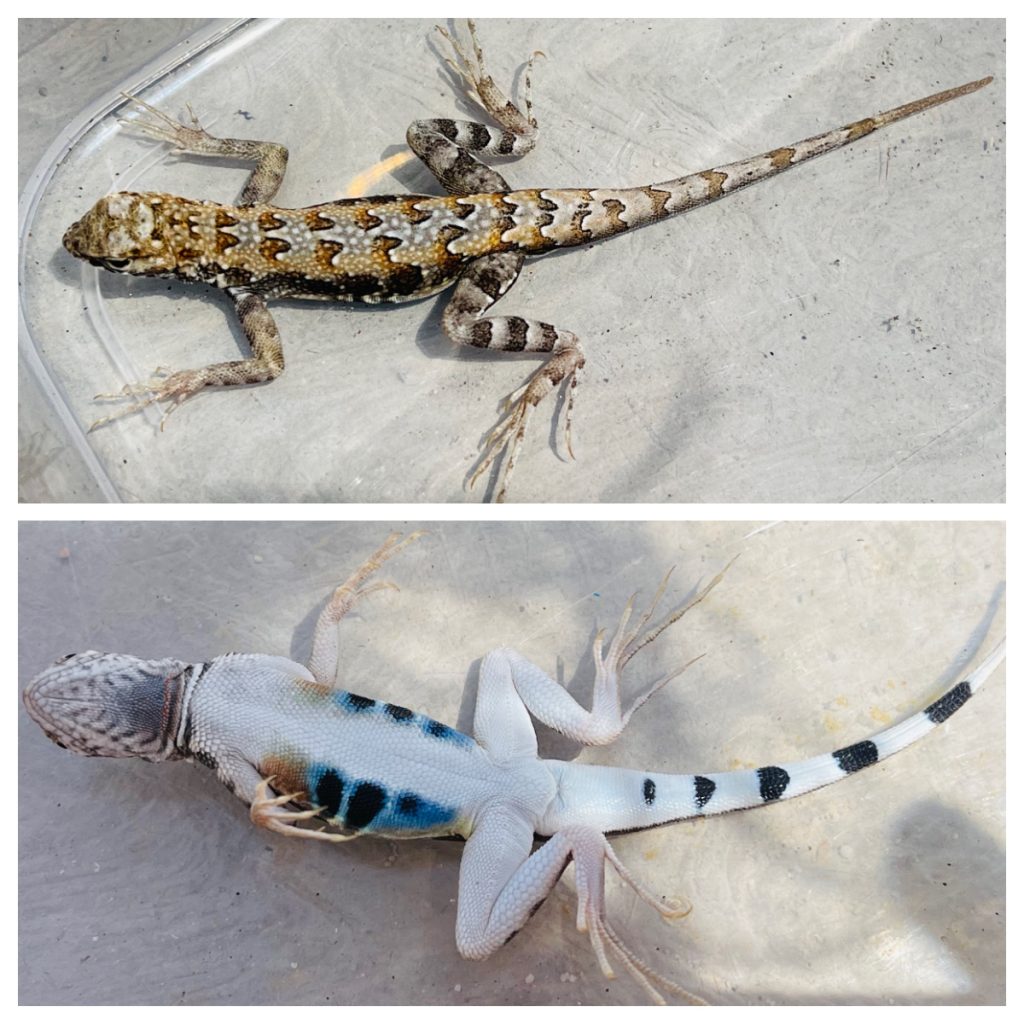
Zebra-Tailed Lizard

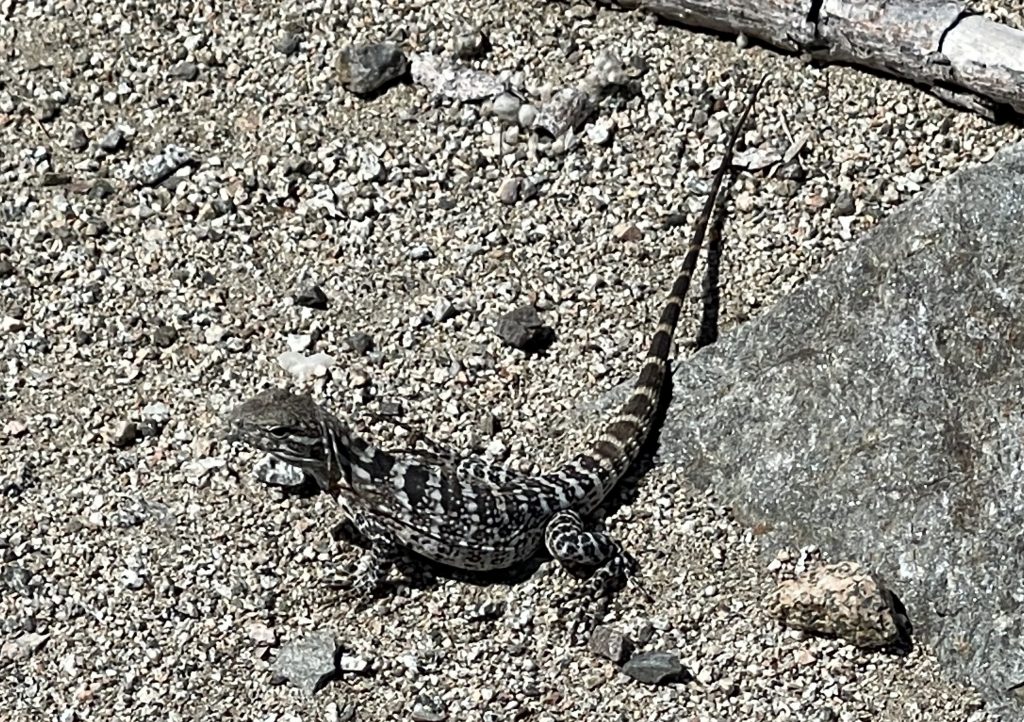
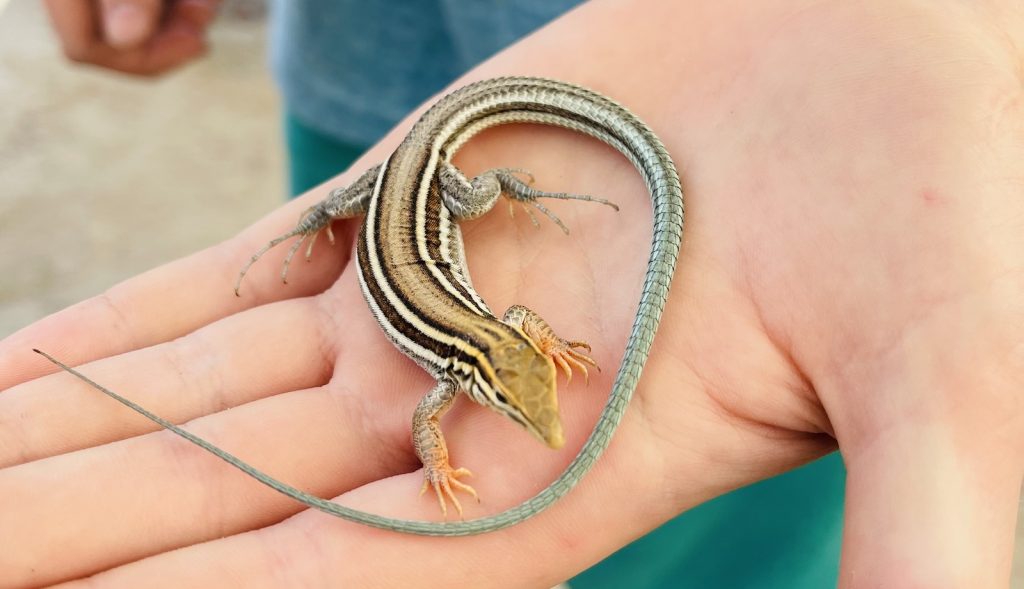
Zebra-Tailed Lizards (Callisaurus draconoides) are fast, harmless, camouflage reptiles with an accurate name, since the underside of their tails displays a striking black and white-striped design. The males have beautiful belly patterns with blue, orange, black, white and even red colorations.

They are most commonly found on sandy arroyo bottoms and on beaches at the edge where the plants stop, but they will live in many habitats. Around La Ventana, I have witnessed about 10 Zebra-Tailed Lizards in one bush.

They are so incredibly fast that they seem to fly to the nearest safe place and, if there is no cover nearby, they will quickly burrow themselves into the sand and disappear. The only reason I was able to catch the one in the photo was because, when it burrowed itself into the sand, its tail was sticking out.

As for their diet, they eat a lot of butterfly and moth larvae as well as ants, termites and beetles.

Cape Gopher Snake

On the 15th of March, as we were driving home from Hot Springs Beach, I saw what looked like a large shadow stretching across the road. But wait, there was nothing casting the shadow and it was 12:30pm, a time when the sun is high and there are few shadows. How could this be possible?

Well, that is a bit of a trick question. If you know what my columns are about, you can probably guess the answer.

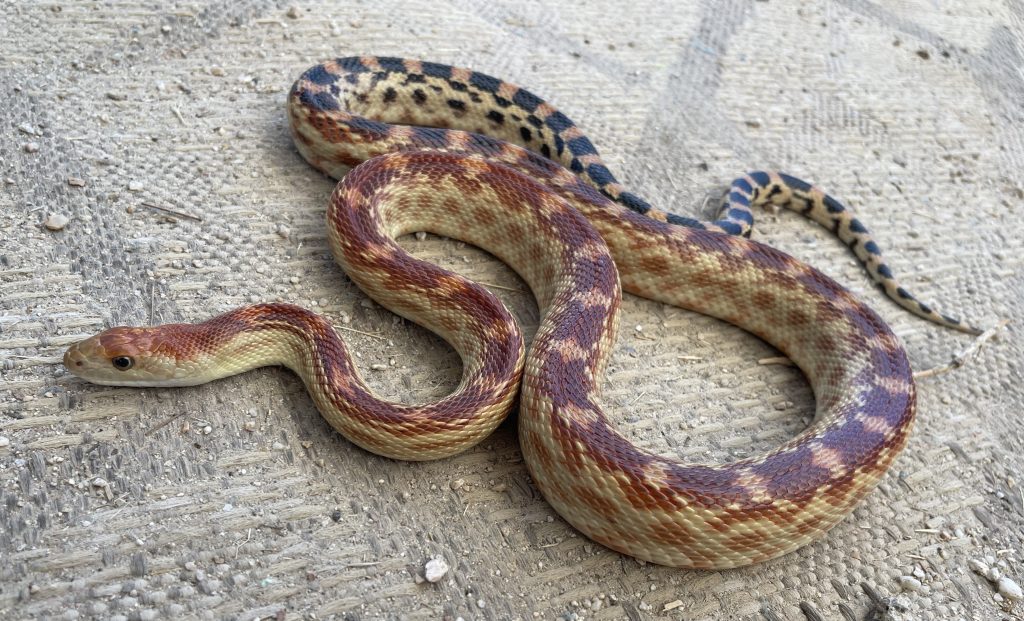
Cape Gopher Snakes (Pituophis vertebralis) are beautiful, big and, in my experience, friendly serpents. They are completely harmless, though they can hiss and shake their tail when threatened, which can be intimidating.

Their coloration is striking. Starting at the head, they have orange-ish bands that fade to black at the tail. The picture below will help to identify them. Gopher snakes can get quite large; the individual in the photo is an impressive 5 feet in length.

As for their diet, they will eat rodents, birds, bird eggs and sometimes even lizards, but I think they prefer rodents. This makes them great for pest control! If you see one of these awesome snakes near your house, I’d say let it stay, as they are harmless. Around here, they are active year round and, interestingly, will be out during the day in both winter and spring, and at night in the summer and fall.

Western Banded Gecko

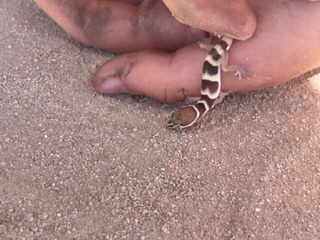
Western Banded Geckos (Coleonyx variegatus) are crafty, quick and adorable lizards with a striking pattern of yellow, white and black. They are nocturnal and not too common, so you don’t see them very often.
The photo below was taken in March in El Sargento. I found this little guy under an old tarp in a roadside trash heap.
Here in the Cape Region, these geckos don’t really hibernate so you can still see them throughout the winter. During the colder months, they spend most of their time under rocks and trash, and rarely come out, similar to many local snake species.
Western Banded Geckos are generalists, meaning they will take any food opportunities they can get, and will eat most moving things that they can fit in their mouths.

Cape Spiny-Tailed Iguana

The Cape Spiny-Tailed Iguana (Ctenosaura hemilopha) is a large, fast and semi-common lizard living in trees, walls, atop cacti and really anything that can offer a quick escape. These diurnal reptiles disappear at even the hint of danger, from both predators and herpetologists alike, making them a nightmare to catch and, for that reason, I don’t have any pictures of this lizard from the mainland.

Fortunately, these iguanas also live on our neighboring island, Isla Cerralvo. As they have far less predators there, they bask happily right on the ground and seem less offended by the Paparazzi, including me last week when I had the opportunity to visit.

Their diet is mostly plant-based but they will eat insects and even carrion on occasion. Their teeth are meant for ripping leaves but are quite good at ripping skin, too. Iguanas also have a small amount of venom, so avoiding bites is a good idea. And those are not their only defenses! After retreating into a rock crevasse, they will orient their spiny tails at the entrance of the hole and, if you try to extract them… well, let’s just say that a spine under the fingernail can be very painful.

Asian House Gecko

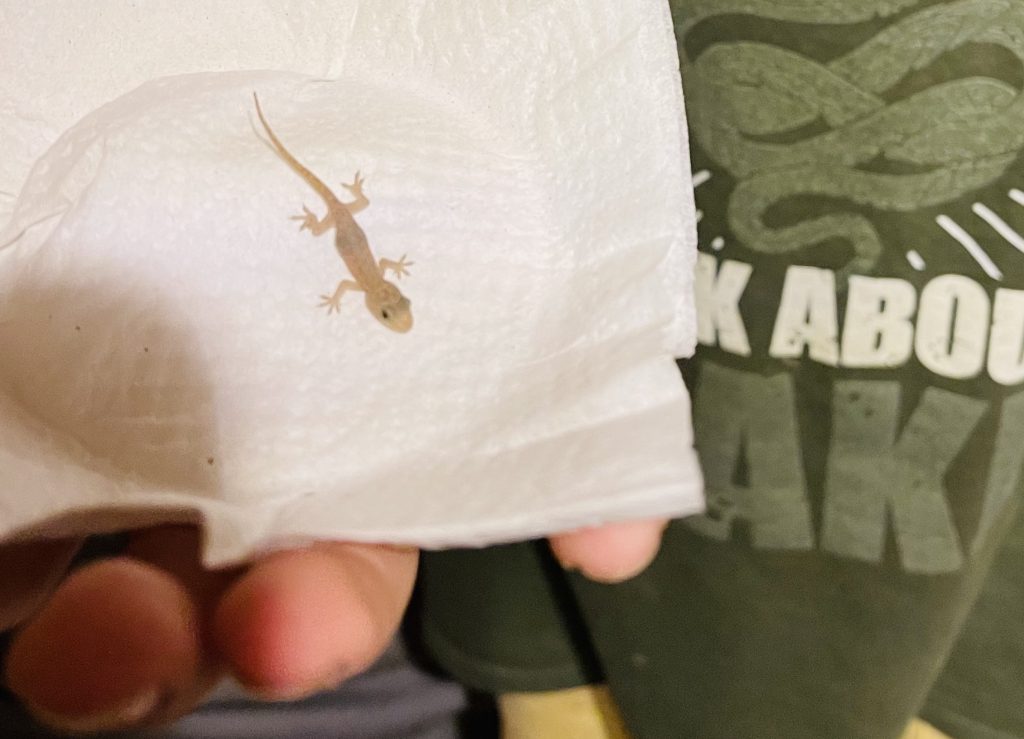
The Asian House Gecko (Hemidactylus Frenatus) is common, quick and, unfortunately, invasive in Mexico. It is also invasive in Australia, the USA, the Galapagos, East Africa, Hawaii, nearly all of Central America and many parts of South America. Fortunately, in Baja, there are no native species that compete with the house geckos, and they are much less damaging than some other invasive species in other places, for example the Burmese Pythons in Florida. All house geckos are relatively small and nontoxic, and frequently live in close proximity to humans. They live in trees and houses and eat insects. They are a good food source for many snake, bird, lizard and mammal species.  As their name suggests, these geckos are originally from Asia. They have conquered nearly all of their survivable habitat. In my opinion, humans and house geckos have a symbiotic relationship: we give them protection and they eat annoying house bugs!

Night Snake

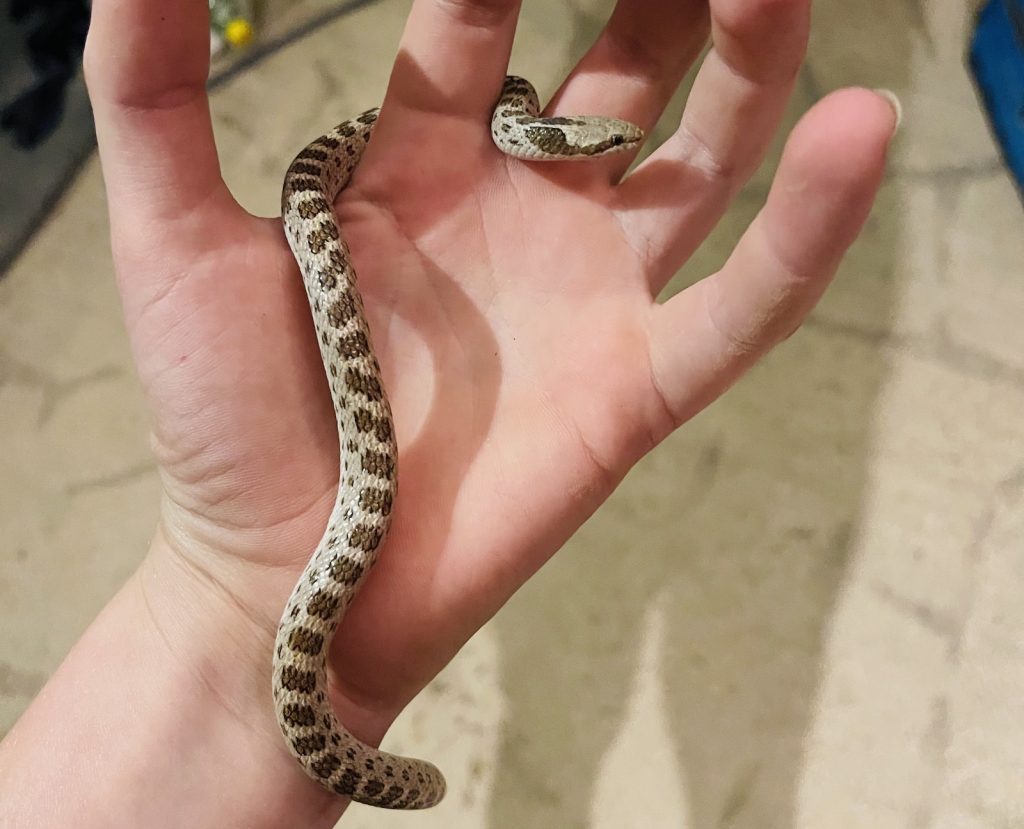
The Night Snake (Hypsiglena family) is a small, harmless and technically venomous snake that inhabits most of Baja California. Near La Ventana, we have three species: the Cape Night Snake, the Baja California Night Snake and the Coast Night Snake. They are all relatively similar. 

The picture below is of a Coast Night Snake that I found in mid January. It can be difficult to tell night snakes apart and I can only offer limited help. The Coast Night Snake is the most common, and the Baja California Night Snake typically has more spots of dark brown and is slightly larger than the other two.When I said “technically venomous,” I was talking about how these snakes are rear-fanged with a weak venom that is just strong enough to help subdue its prey (small lizards, snakes and frogs). They are reluctant to bite, and completely harmless to humans and pets. Similarly, the most well-known snakes in North America, garter snakes, are also mildly venomous in this way and pose absolutely no threat to humans.

Sand Snake

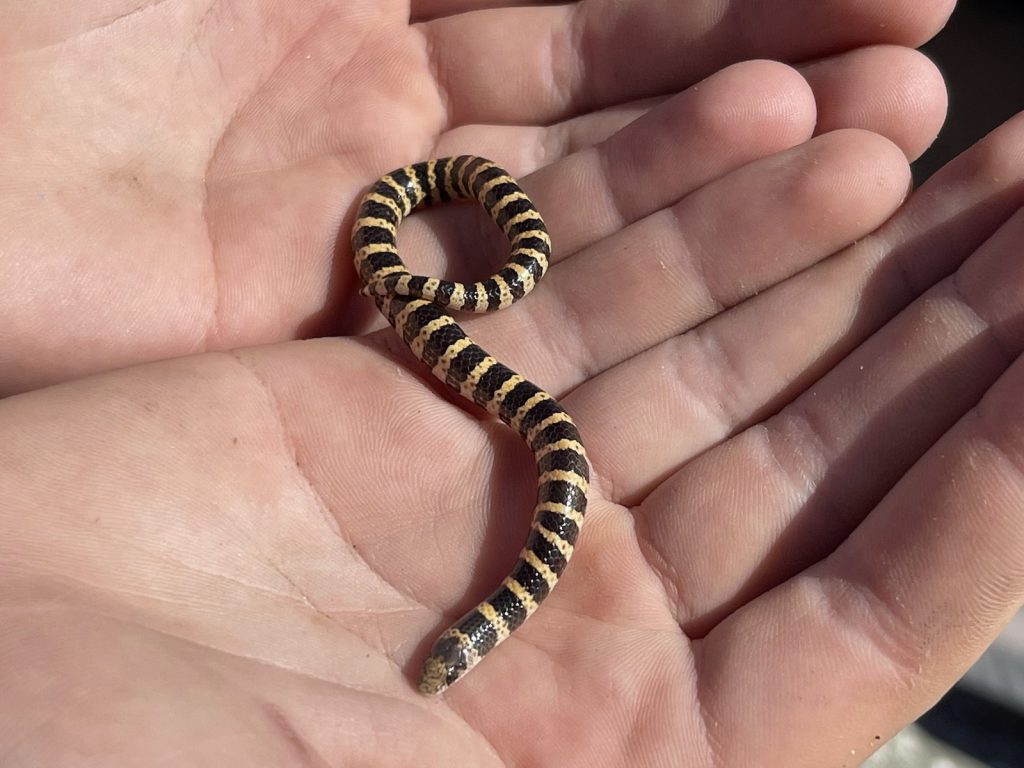
The Sand Snake (Chilomeniscus stramineus) is a small, harmless and striking snake with beautiful pigmentation. Its coloration ranges widely from orange with contrasting black bands to solid brown, or anywhere in between.

Sand Snakes are sometimes known as sand swimmers as they seemingly swim through the sand. These non-venomous cuties are nocturnal and frequently found on sand dunes or anywhere with loose soil, including even rocky outcroppings on occasion. Their tracks look like small curvy indents on the sand between bushes, sometimes littering the dunes.

Interestingly, Cerralvo Island has its own endemic species of sand snake known as Savages Sand Snake that lives only on the island and nowhere else. It’s relatively similar to the somewhat common Sand Snake that shares the mainland with us.

As for the diet of these little reptiles, they eat small invertebrates such as crickets, centipedes, cockroaches and termites. Here in the Cape Region, these snakes are active throughout the year but their peak activity is from mid-March to late August. They are very cold tolerant, and can be found still foraging throughout the night even at temperatures near 16 degrees C (61 degrees F), which is quite cold in the reptile world.

Orange-Throated Whiptail

The Orange-Throated Whiptail (Aspidoscelis hyperythra) is a slender, harmless and graceful lizard with a beautiful blue tail and sometimes an orange neck. Its Spanish name is Huico (pronounced “wee-ko”).

The whiptail is extremely fast and relatively small, growing up to around 2.5 inches, not including its frequently very long tail, which is composed of segments and is sometimes longer than the lizard itself! When being attacked by a predator, the tail can break off at any one segment to confuse the enemy and help the lizard escape. The tail grows back over time.

Its diet is mostly termites but also sometimes cockroaches, spiders and moths. It is more active during the summer months. In the winter, in La Ventana we mostly see juveniles and occasional adult females, but rarely adult males.

This striking local resident is diurnal and prefers relatively dense vegetation but can be readily observed in dry grass fields and frequently yards. During warm, sunny or overcast days, however, they can be seen foraging in the leaf litter. Unlike many human residents, whiptails seem to prefer low or no-wind days.

Baja California Coachwhip

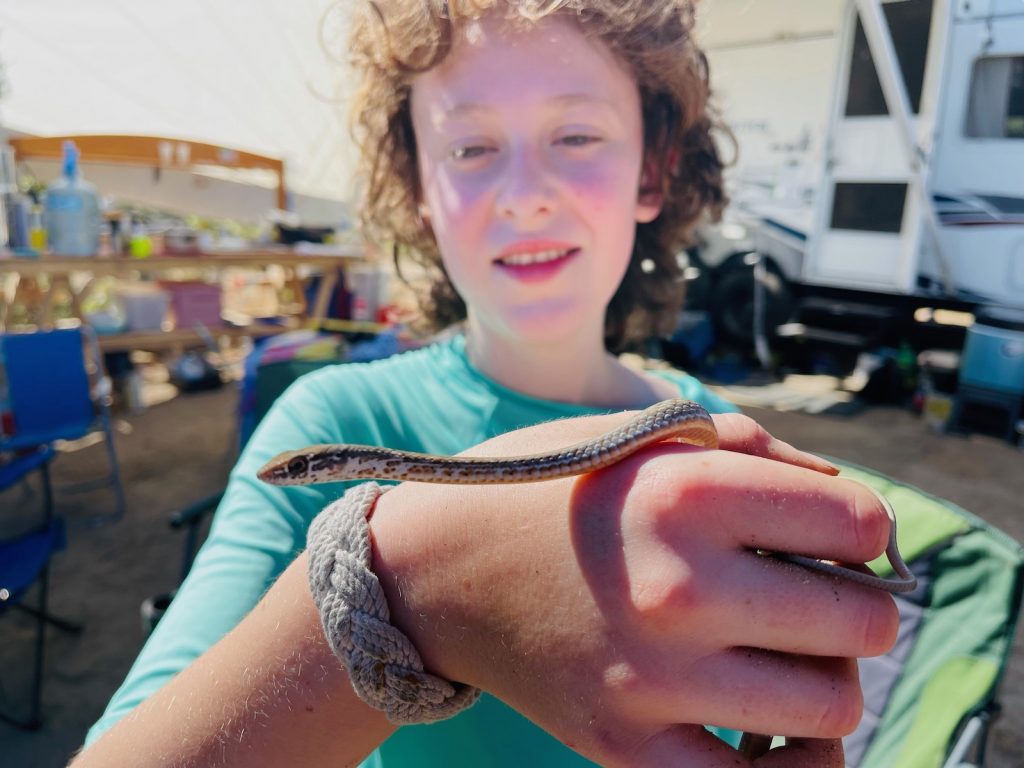
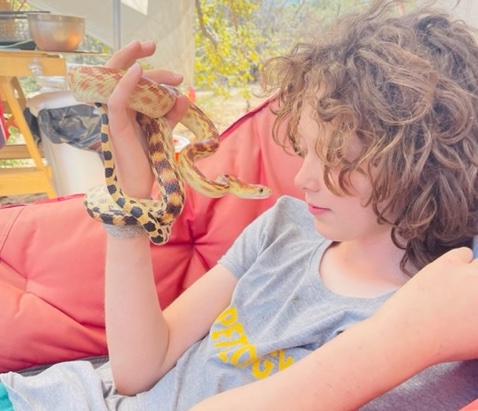
The Baja California Coachwhip (Masticophis fuliginosus) is probably the most common snake in La Ventana and the surrounding region. The photo below shows me holding a juvenile Coachwhip that I found in a brush pile a few weeks ago, in early January.
This slender, harmless, non-venomous snake is diurnal, quite fast and, like many snakes, elusive. 
Normally, adults have black-colored heads, with their bodies fading to gray towards the tail. Juveniles are more brownish, like the one in the photo. They are one of La Ventana’s longest snake species. Adults range in size from four feet up to eight feet long. 
Like many other local snakes, this species is most active during the summer months. During warm, sunny winter days, however, these snakes can be found out and about. Look for them in brush piles, under rocks and flat scraps like discarded wood planks, cardboard, carpet remnants, etc.
Overall, Baja California Coachwhips are beautiful and amazing snakes and, as long as we don’t bother them, they won’t bother us!