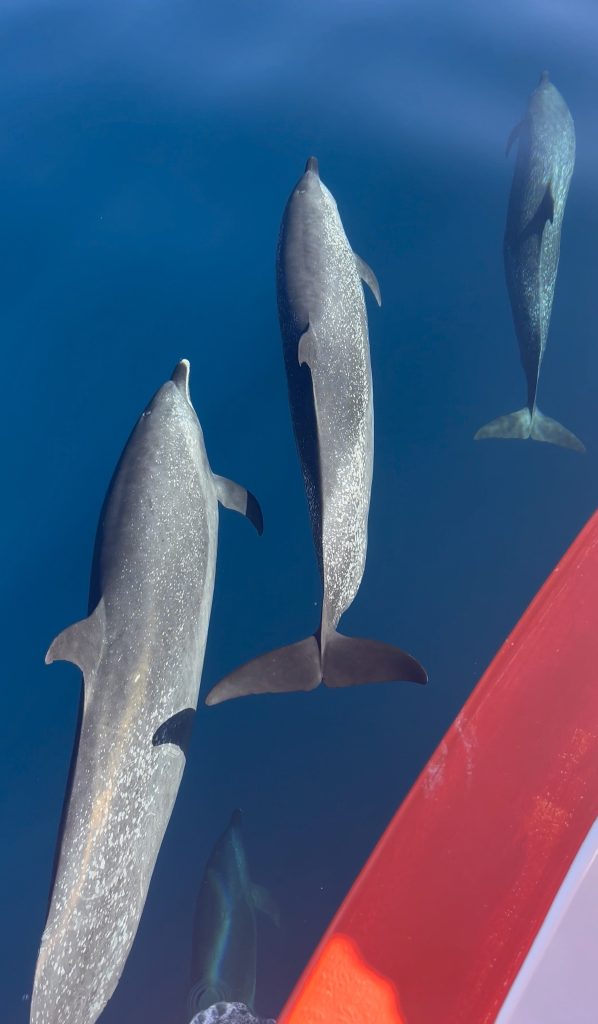
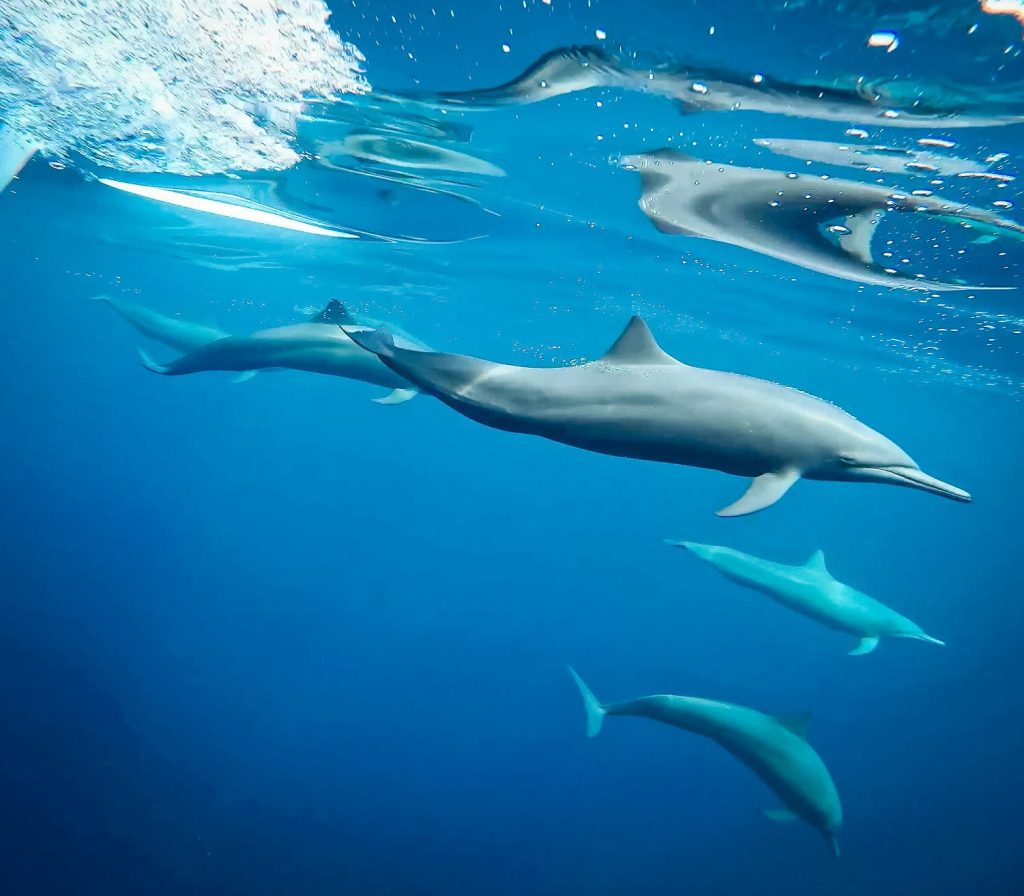
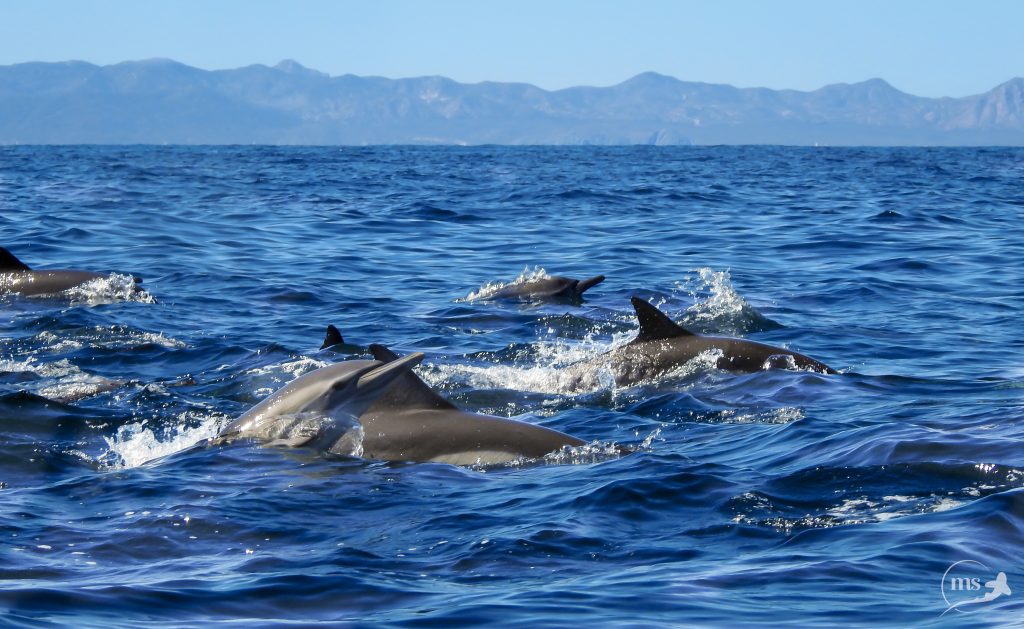
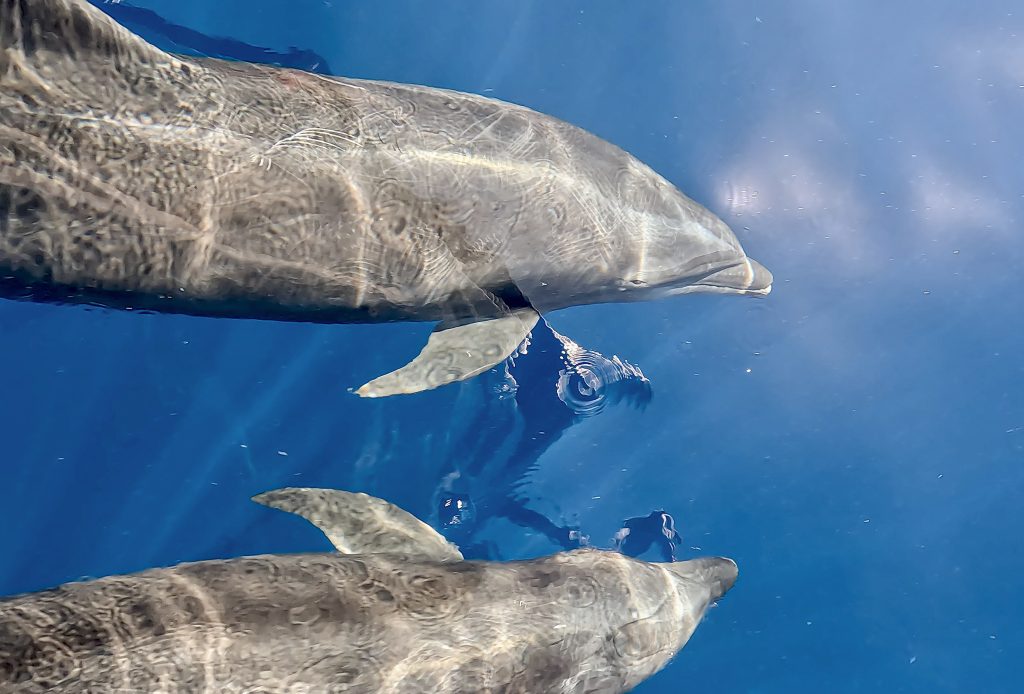
Over the past few weeks, we’ve had the pleasure of encountering these playful and charismatic dolphins all around us. Often, we’ve seen them in large groups, feeding together and accompanied by opportunistic sea lions eager to grab a few leftovers. They’re among our most frequent visitors, sometimes appearing as small family groups, and other times delighting us with the sight of large pods cruising through the water.
Bottlenose dolphins are odontocetes, or toothed whales, meaning they have teeth unlike mysticetes, the baleen-bearing group of whales. They are among the most extensively studied marine mammals in the wild. Their presence in aquarium shows and the fame of the TV character Flipper have made them the most widely recognized dolphin species.
Typically gray in color, bottlenose dolphins get their name from their short, thick snout (or rostrum). Their bellies are lighter gray, almost white, while their backs are much darker.
These dolphins feed on a wide array of prey, including different fish species, squid, and occasionally crustaceans. Their hunting techniques are diverse and sometimes quite complex, such as using bubble curtains to corral fish. They use echolocation to navigate in dark or murky waters and to locate prey, producing clicks that bounce off objects and return information about location, size, and shape.
Highly intelligent and deeply social, bottlenose dolphins display complex behaviors and possess brains larger than ours. They communicate through a rich language of squeaks and whistles, with each individual having a unique “signature whistle”. They are very active on the surface and are keen bow-riders and wake-riders. We see them playing with our boat many times, and even sometimes “snout-riding” in front of large whales!
Each individual can be identified by the unique nicks and scars on their dorsal fins. Through photo-identification, scientists can monitor their movements and life histories over time. A single photo can be incredibly useful!
It is truly a gift to see these beautiful animals swimming in our waters. Dolphins should always remain wild, free to leap, play, be with their families, and ride the waves as they were meant to.